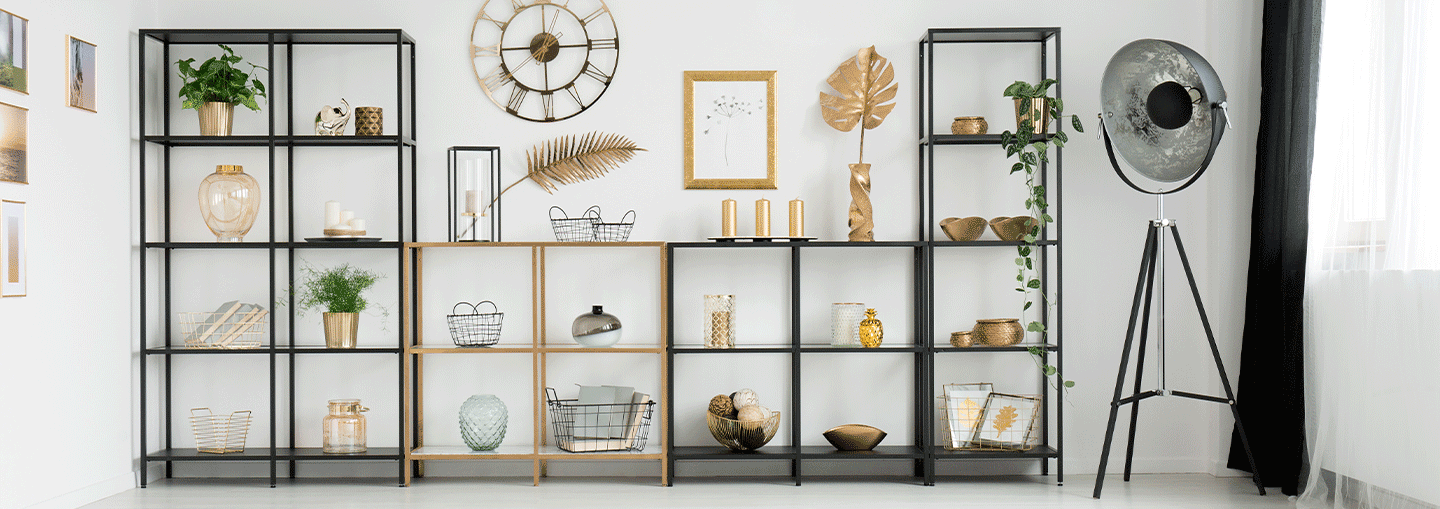
The Role of Open Shelves in Today’s Homes
Open shelves show up everywhere in modern homes. Instead of hiding things, they let the room breathe and allow objects to become part of the design. A stack of dishes in the kitchen, a row of books in the living room, even a single narrow ledge in a hallway — all of these change the way a space feels. Cabinets close things off. Shelves keep things visible, and that visibility adds life.
A Brief Background
From Utility to Design
Shelves began as plain utility. In kitchens, they held whatever needed to be close at hand, no thought about how it looked. Over time, though, designers and homeowners realized that leaving things open could be more interesting than tucking them away. Shelves turned into small stages for the objects of daily life.
Influences from Modern Movements
Two design approaches pushed this idea forward:
- Industrial interiors: with their exposed steel, brick, and timber, they made it natural to leave things visible. Shelves fit right in.
- Scandinavian design: light, simple, and uncluttered, this style favored open space and airy rooms, where shelving worked as a natural extension.
Put together, these influences helped turn shelving into something both practical and expressive.
Everyday Settings
Kitchens
Kitchens show the idea most clearly. Shelves carry the plates, cups, or jars people reach for every day. Repetition — a stack of bowls, a row of glasses — creates a quiet sense of order, even if nothing is “styled.”
Living Rooms
In living spaces, shelves often become the backdrop for personal expression. Books, photos, ceramics, or art objects sit side by side. Instead of decoration added at the end, the shelves themselves become part of the composition.
Smaller Spaces
Bathrooms, hallways, and other tight corners also benefit. A floating shelf provides storage without weighing the room down. It does the job of a cabinet but feels lighter.
The Language of Design
Materials
The material changes the mood. Wood feels warm and familiar. Metal comes across as sharper and more industrial. Glass is light, sometimes almost invisible. Each choice alters not just the shelf but the room it’s part of.
Balance and Arrangement
Arranging shelves is a bit like arranging a painting. The empty space matters as much as the objects.
Useful ideas
- Varying scale avoids monotony.
- A heavy item can be softened by something lighter beside it.
- Small gaps allow the eye to rest.
Light and Shadow
Light adds another layer. Shelves near a window catch daylight as it shifts. A small spotlight in the evening can turn ordinary dishes into something sculptural. Shelves are simple, but light makes them dynamic.
The Double Character of Shelves
Shelves are freeing because everything is in sight. At the same time, they show mess if things are not arranged with some care. The point isn’t perfect styling, though. It’s rhythm. A balance of practical and decorative, of useful and personal. That mix makes a shelf feel real, not staged.
Lasting Place in Design
Open shelving has settled into modern interiors as more than a passing trend. Ateliers like Yanetti, known for custom furniture, highlight this shift toward openness and honesty — rooms that don’t just hide everything away but allow daily life to be seen. A line of shelves might look simple, yet it changes the way a room works, both in function and in atmosphere.