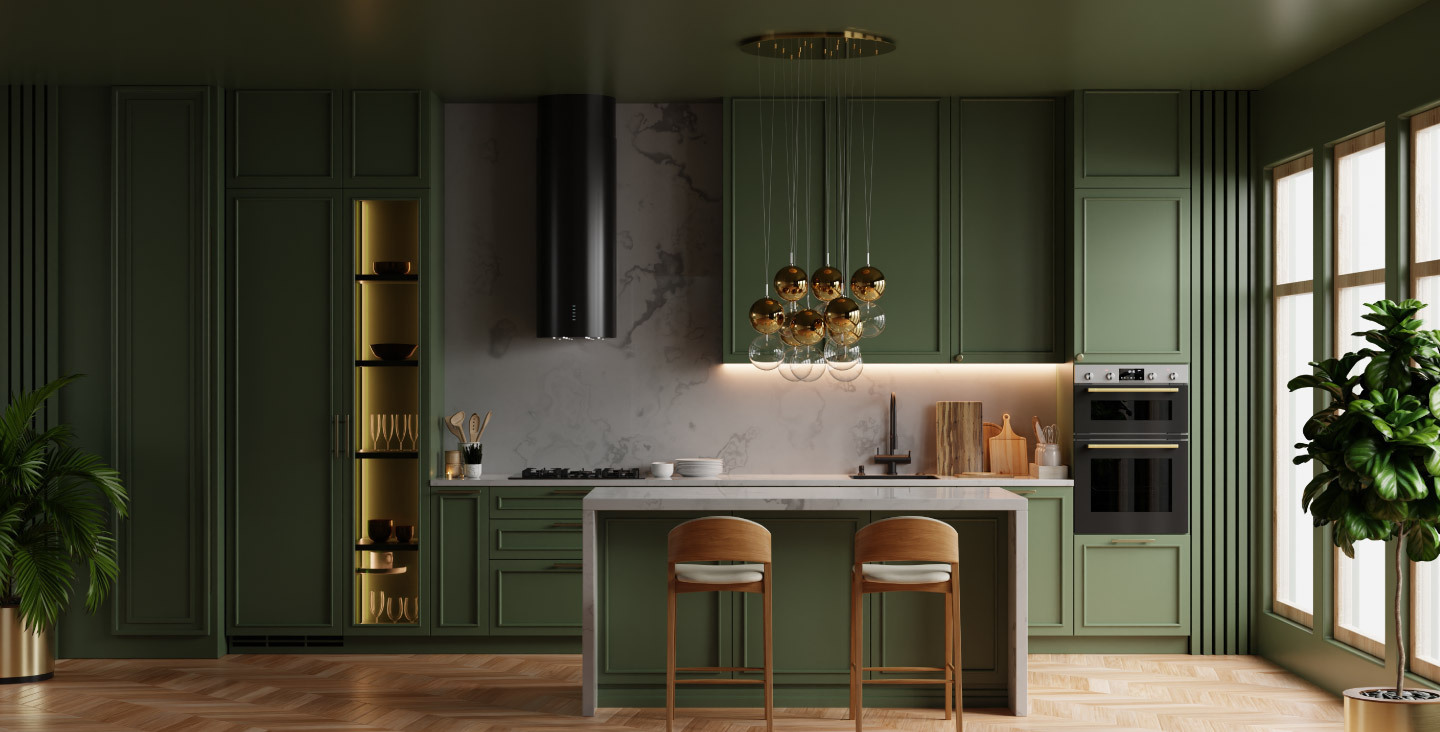
Kitchens in 2026 don’t look radically different at first glance. But once you spend time in them, the difference is obvious. The space works differently. It feels easier to use, less staged, more… real.
A big reason for that is simple. Kitchens are no longer used for just one thing. People cook, work, sit with a laptop, talk, scroll their phone, sometimes all in the same hour. Furniture had to catch up with that.
It’s less about layout, more about how it lives
There’s less obsession with “perfect layouts” now. You don’t see as many rigid setups where everything has one fixed role.
Take the kitchen island. It’s still there, but it’s not just a prep surface anymore. In the morning it’s breakfast, later it’s work, in the evening it turns into a place where people just gather. Nothing moves, but the purpose changes.
Good kitchens now handle that without needing adjustments. You don’t think about it. It just works.
Cabinets don’t stand out anymore
Cabinets used to be a design feature. Now they’re almost the opposite.
They blend in. Full-height, wall-like, sometimes you don’t even notice where the kitchen “ends.” Handles disappear, lines get quieter. In open spaces, this matters more. The kitchen is no longer visually separate from the rest of the home.
It’s not minimalism for the sake of style. It’s just less visual noise.
Materials feel more… honest
This is probably the most noticeable shift.
Glossy, perfect surfaces are still around, but they’re not the first choice anymore. They look good in photos, but in real life they show wear quickly and feel a bit artificial.
What’s replacing them is simpler:
- wood that actually looks like wood
- stone that isn’t overly polished
- metals that don’t shine too much
- surfaces that aren’t perfectly identical
There’s a bit more texture, a bit more depth. Things don’t try to look flawless.
That’s also where custom furniture brands like Yanetti fit naturally. The focus is on materials that age, not ones that only look good on day one.
Storage stopped being complicated
For a while, kitchens were full of clever mechanisms. Hidden drawers inside drawers, systems inside systems. It looked impressive, but wasn’t always удобный.
Now it’s calmer.
You open a drawer, you see everything. You reach, you take it. No thinking.
There’s still smart storage, of course. But it doesn’t try to surprise you. It just does its job.
Minimalism is softer now
Minimalism didn’t disappear. It just relaxed a bit.
Edges are less sharp. Materials mix more freely. The space feels designed, but not strict. You don’t feel like you have to keep everything perfectly aligned for it to look good.
That makes a difference in everyday life. The kitchen feels more forgiving.
Technology is there, but you don’t see it
Smart kitchens didn’t go away. They just became quieter.
Appliances are hidden. Lighting turns on when you need it, but you don’t notice why. Charging points are there, but not in your face.
If everything is done right, you don’t really think about the tech at all.
The island does more than it shows
The island is still the center, but not in a show-off way.
It replaces a lot of things at once. Sometimes it’s a table, sometimes storage, sometimes just a surface where things happen. The design is more subtle now, small height changes, material shifts, nothing dramatic.
It works hard, but doesn’t look like it.
Color is more controlled
There are still bold kitchens, but they’re less common.
Most spaces start neutral, then add contrast in small ways. Maybe darker lower cabinets, maybe a muted tone somewhere. Nothing too loud.
It’s easier to live with. And easier to change later if needed.
So what actually changed?
Not one big thing. Just a lot of small decisions that add up.
Kitchens feel less like something you designed once and more like something that supports you every day. Furniture is quieter, materials are more real, and the space doesn’t try too hard.
And that’s probably the biggest shift.