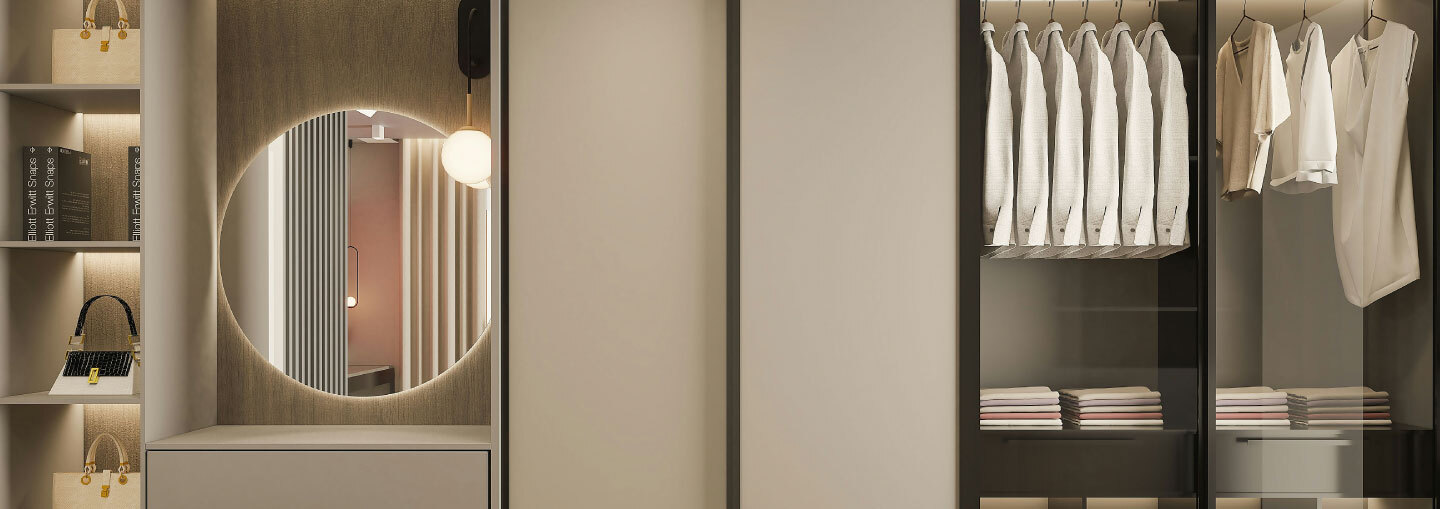
Open a closet that feels balanced, well-lit, and quietly composed. The shelves line up neatly, the handles glide, the light falls just right. There’s something instantly calming about such a space, something that goes beyond storage and symmetry.
Closet design, when done well, isn’t only about keeping things tidy. It’s about how order affects the way we think and feel. The daily act of choosing what to wear, storing what we love, and closing the door behind us can either bring calm or create quiet stress. The difference lies in how the space is built, how it flows, and how it reflects its owner.
Where Clarity Begins
Psychologists have long noted the connection between physical order and emotional well-being. Studies at the University of California, Los Angeles, found that visual clutter in homes raises levels of cortisol, the stress hormone. When everything is visible and out of place, the brain stays alert, unable to rest.
A well-organized closet reverses that effect. Every section has meaning, every surface invites ease. Order gives the mind a clear signal that things are under control. What looks like cabinetry and lighting is, in truth, a small architecture of peace.
Many people are surprised to realize how deeply something as ordinary as a closet can influence their mornings. When the space feels calm, the day begins the same way.
Order as a Design Language
In interior design, order isn’t about perfection, it’s about rhythm. The human eye and mind crave patterns that feel natural, not rigid. Designers know this instinctively. Even small adjustments in balance or symmetry can make a space feel right.
For Dubai-based furniture makers like Yanetti, the psychology of design is just as important as the craftsmanship itself. A closet isn’t treated as storage but as a living environment, one that shapes routine, mood, and comfort. Every hinge, finish, and texture is part of that conversation.
Materials That Calm the Senses
The tactile experience of a closet matters more than most people think.
- Wood tones like light ash, walnut, or oak bring warmth and natural grounding.
- Matte finishes absorb light gently, keeping reflections soft.
- Glass accents introduce depth and visibility, preventing visual heaviness.
- Leather or linen details add texture and quiet luxury through touch.
These material choices don’t just please the eye, they soothe the body. The act of opening a smooth drawer or running a hand along a polished surface can create a small but real moment of relaxation.
Premium makers such as Yanetti often emphasize this sensory balance. The goal is not excess but ease, furniture that blends into daily life and improves it quietly.
Light as Emotion
Lighting might be the most overlooked aspect of closet design, yet it shapes how we feel in the space.
Soft, warm illumination creates calm, while harsh white light feels sterile. Hidden LED strips under shelves or inside hanging sections allow light to touch fabrics without glare.
At Yanetti’s Dubai workshop, designers often treat lighting as mood architecture. Instead of spotlighting, they use ambient glows that mimic morning or evening light – times when people typically interact with their wardrobes. The effect isn’t theatrical, it’s human.
Design That Follows Behavior
A functional layout should mirror how a person naturally moves. That means understanding habits, not just dimensions.
Some people prefer seeing everything at once, while others want closed compartments for visual calm. There are those who fold meticulously and those who hang everything in order of color or occasion.
The most successful closets respect these patterns rather than forcing new ones. At Yanetti, for example, designers begin every project by studying movement, how someone enters the space, where their eye goes first, what they reach for. It’s an approach rooted in empathy, not trend.
The Subtle Power of Symmetry
Humans are drawn to alignment. Repetition, in hangers, shelves, or drawers, offers a visual heartbeat. Even without realizing it, the mind interprets symmetry as stability. That’s why an evenly spaced rack of clothes or balanced shelving can feel so satisfying.
But perfect uniformity can also feel lifeless. The key lies in slight variation – an open shelf beside a closed cabinet, a change in grain direction, a softer corner. Order, after all, should feel alive.
Closets as Emotional Architecture
Closets carry identity. What we keep, display, or hide tells stories about who we are.
Psychologists writing for Psychology Today describe this as “curated order” – the emotional relief that comes when personal items are organized with care. The result isn’t only aesthetic; it affects self-perception. Seeing one’s space in harmony reinforces the idea that life, too, is balanced.
In Yanetti’s projects, this is often where personality enters. One client might want a display shelf for perfumes, another hidden compartments for accessories. Both choices express not vanity but ownership – the simple joy of seeing one’s world in order.
Harmony Through Routine
Morning and evening routines revolve around the closet. The experience of entering a space that welcomes you back – clean lines, steady light, familiar arrangement – quietly shapes how the day feels.
It’s the opposite of chaos. No frantic searching, no tangled hangers. Instead, a rhythm: step in, select, close. These small acts restore composure. The design supports them not through instruction but through intuition.
Many of Yanetti’s Dubai clients describe their custom wardrobes as “the calmest corner of the house.” It’s not about size or luxury, but the feeling that everything fits, physically and emotionally.
The Practical Side of Psychological Comfort
Harmony may sound abstract, but it grows from practical decisions:
- Soft-close systems reduce sensory irritation, no sudden slams or jolts.
- Adjustable shelving ensures adaptability as wardrobes evolve.
- Ventilated panels maintain freshness, linking comfort with hygiene.
- Hidden lighting controls keep the look serene and uninterrupted.
When the practical details work seamlessly, the emotional comfort follows naturally.
Longevity and Trust in Design
A closet that stands the test of time adds to the sense of stability it provides. Timeless design – clean forms, durable finishes, honest craftsmanship – encourages care. People tend to treat lasting pieces more thoughtfully.
For Yanetti, longevity is part of emotional design. A wardrobe made to last becomes familiar, reliable, and quietly reassuring. Over years of daily use, it stops feeling like furniture and becomes part of the home’s personality.
The Mind Behind the Door
Open the doors of a well-designed closet and you’ll find more than clothes. You’ll find evidence of thought, of care in proportion, texture, and rhythm. Behind that order lies an understanding of psychology – that peace comes not from emptiness but from intention.
When furniture supports both mind and body, life inside the home changes in subtle ways. Routines simplify. Mornings quiet down. Even the act of returning an item to its place feels complete.
That’s the real beauty of thoughtful design – a harmony that begins behind a single door and slowly expands to fill the entire home.