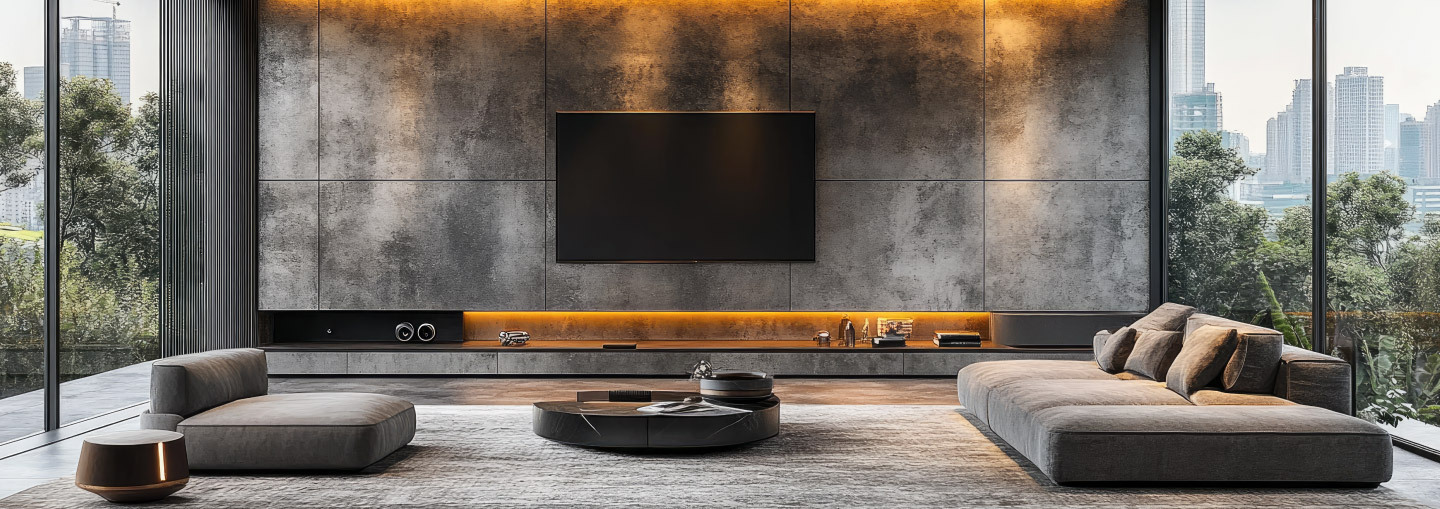
A TV and media wall is often left until the end of a project, addressed after furniture layouts and finishes are already decided. In practice, it functions more like architecture than decoration. Once it is built, it sets the rules for how the room works, where people sit, how sound travels, and whether the space feels orderly or constantly unsettled.
When the planning is off, the problems surface quickly. The screen feels uncomfortable to watch, cables refuse to disappear, storage fills up too fast, or the wall dominates the room without giving much back. When the design is right, none of this draws attention. The wall looks resolved, the room feels easier to use, and daily life flows without friction.
Start With the Room, Not the Screen
A functional media wall starts with the real room, not an idealized plan or a showroom reference. Width, depth, ceiling height, window placement, and walking routes all place limits on what will feel comfortable.
Viewing distance is not a guideline, it is a constraint. A screen that is too large forces constant eye movement, while a smaller one can feel disconnected from the space. Seating habits matter just as much. At home, people recline, lean sideways, stretch out, or watch from the edge of the sofa. The wall has to accommodate these habits, not fight them.
In open-plan interiors, the media wall often becomes a point of orientation. It helps organize the room without dividing it physically. In smaller spaces, restraint is essential. The wall should support the room rather than consume it.
Height, Proportion, and Physical Ease
Mounting height is where most regrets begin. A TV placed too high may look tidy on a drawing, but it quickly becomes tiring to use. In professional practice, the screen is usually positioned so its center sits close to seated eye level, adjusted for sofa height and viewing distance.
Proportion does not stop at the screen. Surrounding panels, shelving, or cabinetry need to relate to the wall as a whole. Over-framing or dense compositions make the wall feel heavy and tense.
Alignment is what brings calm. Panel lines that meet door frames cleanly, shelves that respect window heights, or horizontal elements that echo ceiling details. These decisions are subtle, but they are the difference between a wall that feels designed and one that feels assembled.
Built-In Structures or Lighter Compositions
The choice between a full built-in wall and a lighter, floating solution is driven by use rather than style.
Built-in media walls suit homes that need containment. They hide visual clutter, provide long-term storage, and give large rooms a sense of scale. In family homes especially, enclosed storage prevents the wall from becoming a collection point for cables and devices.
Floating panels read lighter. They work well in apartments and restrained interiors where visual weight needs to be controlled. A single panel can hide mounting systems and wiring without turning the entire wall into joinery.
Many successful projects sit between these extremes, pairing a floating TV panel with low cabinetry that offers storage without adding bulk. Studios such as Yanetti often approach this balance through integrated joinery systems, similar to how custom media walls and bespoke furniture are planned as part of the architecture rather than separate elements.
Materials and How the Wall Ages
Materials determine how a media wall feels months and years after installation.
Stone adds gravity. Used carefully, it gives the wall a structural presence rather than a decorative one. Wood introduces warmth and often improves acoustics. Slatted or paneled wood can stretch a wall visually, making it appear wider or taller depending on orientation, while also softening sound reflection.
Minimal painted walls demand precision. Flush panels, crisp junctions, and controlled shadow gaps leave no room for inconsistency. When executed well, the technology recedes. When executed poorly, imperfections become obvious.
Storage That Knows When to Disappear
Storage is necessary, but it should not become the main event. Open shelving fills up quickly and often turns the wall into visual noise.
Designers tend to limit open shelves to a few intentional objects and hide everything else behind closed panels. Flat fronts, discreet handles, and consistent lines allow storage to sit quietly within the architecture. The same principles apply to custom wardrobes and built-in storage, where function is meant to disappear into the background.
Ventilation, Wiring, and the Unseen Work
A calm media wall only works when the technical side is handled properly. Electronics generate heat, and sealed cabinets shorten their lifespan. Good designs allow airflow through discreet gaps, rear voids, or hidden vents.
Wiring needs to be solved early. Power, data, speakers, and likely future upgrades should be planned from the start. Fixing cables later usually results in visible trunking, extra openings, or awkward surface boxes.
Sound also belongs in the brief. Hard surfaces bounce sound, while softer materials absorb it. The balance affects clarity and how comfortable the room feels during everyday conversation, not just during movie nights.
Lighting as Support, Not Performance
Lighting should help the media wall function, not perform for attention. Soft backlighting adds depth and reduces eye strain without turning the wall into a feature.
Warmer light suits wood and stone, while neutral tones work better with minimalist finishes. Separate lighting controls allow the wall to behave differently during the day, in the evening, or during focused viewing.
Designing for Use Over Time
A functional media wall should survive change. Screens get replaced, devices multiply, and habits shift. What should remain is a clear structure that accepts those changes without forcing a redesign.
Balance keeps the wall steady. Proportion makes it belong to the room. Ventilation and wiring protect both performance and appearance. Most importantly, the design respects real life.
When these fundamentals are right, the wall stops asking for attention. It simply works, day after day, without becoming the room’s personality. That is the measure of a successful media wall: useful, calm, and believable.