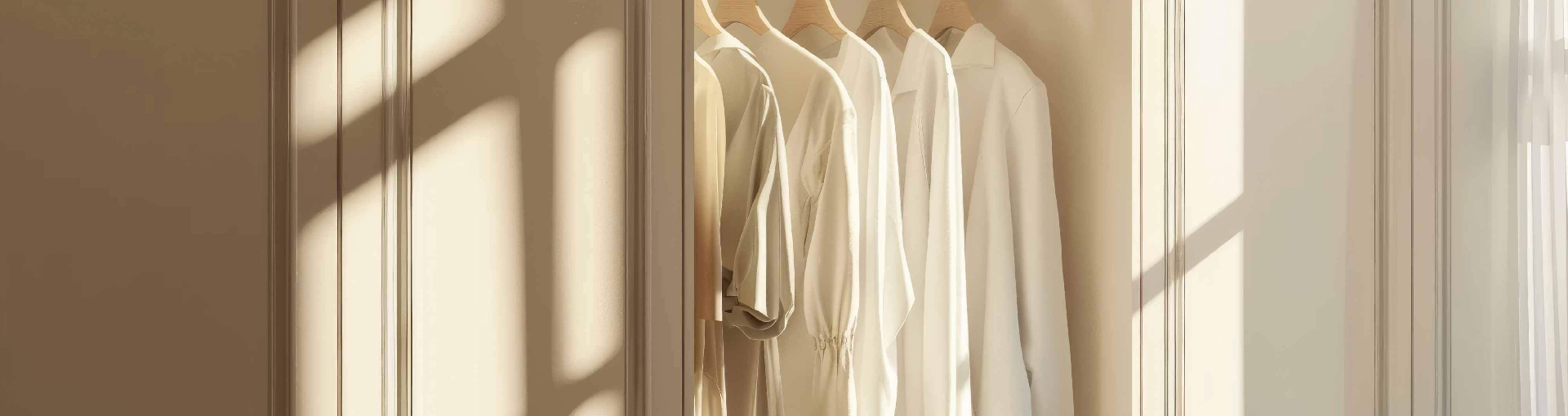
You know that tiny pause when you open a wardrobe and just stand there for a second. Sometimes it feels noisy, even if nothing is actually making a sound. Hangers scrape, light is harsh, things lean out at you. Other times the moment is strangely calm. You see what you need, the door feels solid in your hand, and your brain is already half a step ahead, choosing.
That change in feeling is not magic. It is design, but the quiet kind. A wardrobe is the piece of furniture you meet closest and most often, yet it is usually the last thing people think about when they plan a home.
A Wardrobe You Feel, Not Just See
Most rooms are arranged for visitors. The wardrobe is for you alone. You stand almost nose to panel, usually in a hurry, sometimes in the dark, and you expect the space to behave. When it does not, the irritation is immediate: a rail that is too high, a drawer that stops short, a pile of shoes building a small mountain on the floor.
Good wardrobe design starts with this simple idea: it is a working space, not a display. The question is not “How will this look on Instagram”, but “How does this feel on a Monday morning when you are late and still half asleep”.
Only after that does the fine furniture work begin.
How routine shapes the layout
Designers who specialise in storage often begin by mapping habits.
- Which items must be visible the moment the doors open
- What can live lower or higher because it is used once a week, not every day
When the internal structure follows that map, the wardrobe stops fighting you. You are not hunting for things, you are just moving.
Light That Behaves Instead of Shouting
Light inside a wardrobe is a strange thing. When it works, you barely notice it. When it is wrong, it feels like standing in front of a shop fitting.
The best light does not blast straight at your face. It slides along the edges of shelves, tucks itself under a rail, or glows softly from the back panel. Clothes are lit, shadows are gentle, and there are no bright points that stab your eyes first thing in the morning.
In Dubai, studios like Yanetti treat light as part of the structure, not a decoration added later. Channels for LEDs are cut during production, cables vanish inside panels, and sensors are placed where your hand naturally lands. You open the door and the wardrobe wakes up with you, quietly, without drama.
Simple rules that help light feel natural
- warm or neutral tones rather than cold blue
- even, indirect strips instead of one strong spot
- light that turns on and off where you actually stand, not on the opposite door
These are small decisions, yet they change how the space feels every single day.
Texture and Materials: The First Real Conversation
After light, the next thing your brain checks is touch. You might not notice yourself doing it, but your hand always has an opinion.
A thin, sharp handle tells one story. A rounded, steady one tells another. A drawer front that feels hollow makes you cautious. A panel with a bit of weight and a soft edge feels trustworthy.
Warmth under your fingers
Natural wood, even when it is veneered, has a warmth that people recognise immediately. Open pore finishes let you see and feel the grain. Soft touch laminates give a modern, almost velvety sensation without demanding attention. Fabric in the base of a jewellery tray stops metal tapping and adds a quiet sense of care.
At Yanetti, surfaces are treated as carefully as the structure. Italian machining gives accurate lines and joints, then the team finishes edges and faces by hand so they do not feel sharp or synthetic. The result is a wardrobe that looks precise but never cold.
Proportion, Movement, and Small Numbers
A wardrobe can be made from and quality materials and still be exhausting to use if the measurements are off. Proportion is the difference between “it fits” and “it feels right”.
Hanging rails that sit a few centimetres too high quickly turn into a shoulder workout. Shelves that are too deep swallow piles of clothes, which then lean and collapse. Drawers that do not come out fully hide things at the back, and those forgotten items slowly turn into clutter.
Designers who care about everyday comfort watch how people move, then adjust.
Tiny adjustments that change everything
- lowering a rail slightly so shirts can be taken with a straight arm, not a stretch
limiting shelf depth so folded stacks stay neat instead of drifting backwards - placing drawers for underwear and everyday items between waist and chest height
None of these choices will ever appear in a glossy photo, but you feel them every single day.
Hardware that stays in the background
The mechanics should almost disappear. Good hinges do not squeak. Soft close runners finish the movement without a slam. Handles feel solid but not sharp. Yanetti leans on proven European hardware systems for this reason, then integrates them into their own carcass construction so doors and drawers keep moving the same way year after year.
Colour and Calm
Colour inside the wardrobe quietly influences how rushed or relaxed you feel. Pale interiors – light oak, soft beige, gentle grey – reflect light and make everything easier to read. Darker tones, like walnut or charcoal, wrap the space in a more intimate mood. Both can work, but the key is balance.
Research on interiors often points to the same idea: strong contrast and very loud colours trigger more mental effort. In a wardrobe, where the job is already to make choices, that extra visual noise is not helpful. This is why many high-end wardrobes use neutral interiors and let the clothes bring personality.
In bright climates, pale interiors have another advantage: they help the light travel. Even a small LED strip can illuminate the contents properly when the surfaces around it are not fighting for attention.
Storage with Intention, Not Just Capacity
People often say, “I need more space”, when what they really need is space that understands what they own. A tall hanging section has no value if everything you wear stops at hip length. Twenty shoe shelves will not help if you live in three favourite pairs.
The most effective wardrobes keep prime areas for daily items and push rare pieces slightly further away, but still clearly organised. Seasonal clothing, occasional suits, or evening dresses can live higher or lower, as long as they have a defined home. The important part is that the things you reach for every morning are right there, easy to see and put back.
Designers at Yanetti often describe their approach as “planning for future laziness”. In other words, they know there will be days when you do not have the energy to fold perfectly or sort carefully, so the structure has to work even then. Wide drawers instead of many small ones, rails that allow a quick hanger, shelves that forgive slightly messy piles – all of this keeps the wardrobe usable in real life, not just on day one.
When Everything Quietly Works Together
In the end, the perfect wardrobe is not necessarily the largest, or the one with glass doors and spotlights. It is the one that never argues with you.
Light lets you see what you need without taking over. Texture feels reassuring rather than fragile. Doors open where they should, drawers come out far enough, nothing snags or bangs. Colours stay calm in the background. The whole thing seems to know how your day usually unfolds.
When a wardrobe is built with that level of intention, it stops being just a box for clothes. It becomes a small private interior inside the home, a place that quietly keeps order while the rest of life stays busy.